
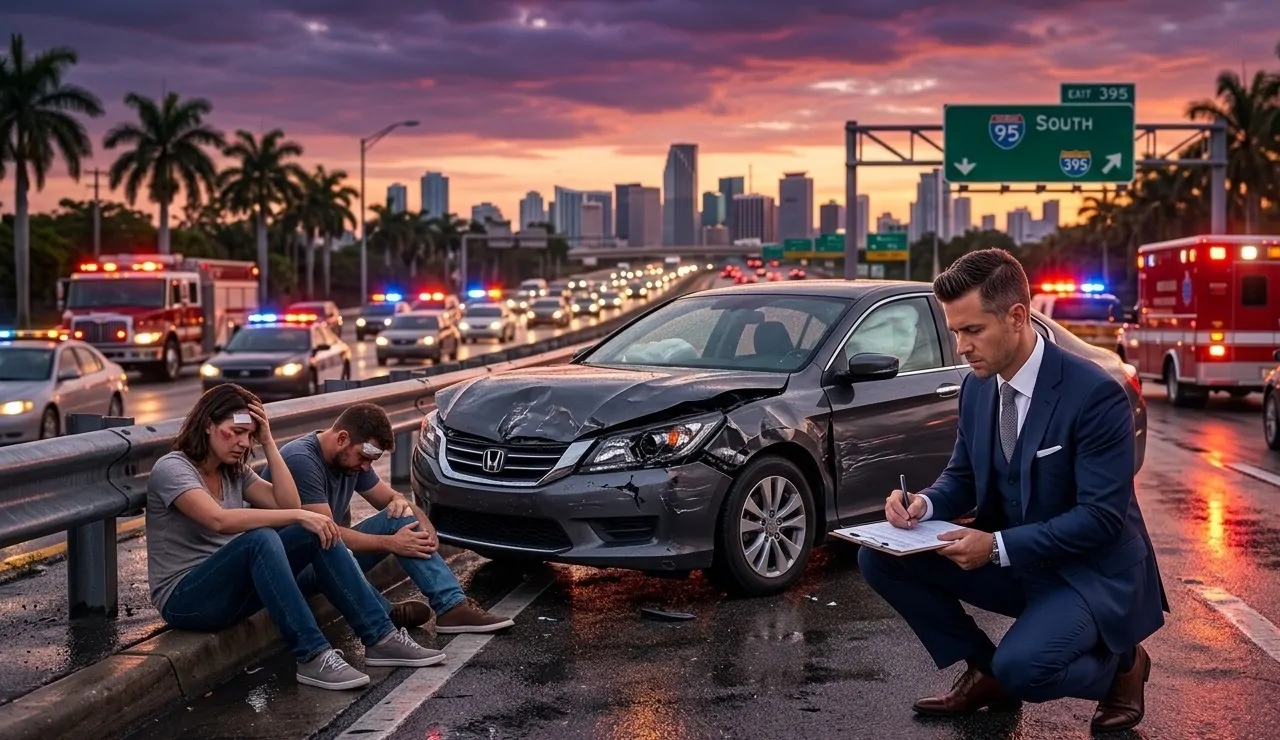
Proving a Phantom Vehicle Accident: Essential Evidence You Need
You’re driving home after a long day. Another car suddenly swerves into your lane without warning. You brake hard and veer right to avoid collision. Your vehicle crashes into a guardrail. The other driver speeds away like nothing happened. You’re injured, your car is destroyed, and the responsible driver disappeared. This scenario happens more often than people realize throughout Florida.
Phantom vehicle accidents leave victims frustrated and injured without an obvious person to hold accountable. Insurance companies often deny these claims immediately. They question whether another vehicle was even involved. If you want to know what evidence is needed to prove a phantom vehicle accident and protect your legal rights, this guide is for you.
What Is a Phantom Vehicle Accident?
A phantom vehicle accident occurs when another driver causes a crash but leaves the scene immediately. These accidents don’t always require physical contact between vehicles. The phantom driver’s actions force you to take evasive measures resulting in a crash.
Florida law often classifies these incidents under hit-and-run or uninsured motorist claims. Common scenarios include being forced off the road by aggressive drivers. Sudden lane cut-offs cause victims to swerve and crash. Drivers causing chain reaction collisions sometimes flee before police arrive.
A phantom vehicle accident in Florida creates unique legal challenges for injured victims. The responsible party vanishes leaving no insurance information. Victims must prove another vehicle caused their crash despite that driver’s absence.
Why Proving a Phantom Vehicle Accident Is More Difficult
Insurance companies routinely challenge phantom vehicle accident claims aggressively. No driver gets identified at the scene or afterward. This makes holding someone accountable seem impossible initially. Lack of vehicle damage evidence from contact raises insurer suspicions. They question whether another vehicle was actually involved.
Limited witnesses make corroboration difficult in many cases. Most phantom vehicle accidents happen quickly on highways or rural roads. Insurance companies require strong proof before paying these claims. They assume fraud unless evidence proves otherwise.
Uninsured motorist coverage becomes the key factor in recovery. This coverage applies when hit-and-run drivers cause accidents. However, insurers still demand substantial evidence before approving phantom vehicle claims under UM policies.
So what kind of proof can strengthen your claim? Let’s explore the key evidence needed to prove a phantom vehicle accident.
Police Reports: The First Piece of Evidence
Reporting the crash to police immediately creates the foundation of your claim. Officers arrive and document the scene thoroughly. They take your statement about the phantom vehicle’s actions. Other witness statements get recorded in the official report.
Police diagram the accident showing vehicle positions and roadway conditions. This official record becomes critical for insurance claims later. Without a police report, insurers almost always deny phantom vehicle claims. The report proves you reported another vehicle’s involvement immediately. Delayed reporting raises suspicions about claim validity.
Witness Statements Can Strengthen Your Case
Independent witnesses provide crucial corroboration for phantom vehicle accident claims. Bystanders standing nearby may have seen the other vehicle’s actions. Other drivers traveling the same road witnessed the phantom driver’s behavior. Passengers in your vehicle saw everything unfold.
Nearby business employees working outside observed the incident. These witnesses confirm the phantom vehicle’s sudden lane changes or aggressive maneuvers. They verify reckless driving that caused your evasive actions.
Most importantly, witnesses confirm seeing the vehicle fleeing the scene. Their testimony proves you didn’t fabricate another vehicle’s involvement. Insurance companies take witness statements seriously during claim investigations.
Video Footage and Dashcams Can Reveal the Truth
In many phantom vehicle accident cases, technology becomes the most reliable witness. Cameras capture events exactly as they occur, removing guesswork and conflicting recollections. When a driver disappears from the scene, video recordings can help reconstruct what really happened and show how another vehicle triggered the crash.
Let’s explore how different types of video evidence can help uncover the full story.
- Dashcam recordings – Your own dashcam or another driver’s camera may have captured the phantom vehicle. These recordings show the vehicle’s actions and your evasive response clearly.
- Traffic cameras – State and local traffic monitoring systems record highway activity constantly. Footage from these cameras can identify phantom vehicles and prove their involvement.
- Business surveillance cameras – Stores, gas stations, and restaurants near the accident location often have exterior cameras. Their footage may show the phantom vehicle before or after the crash.
- Residential security cameras – Homeowners near the crash site may have doorbell or security cameras. This footage sometimes captures phantom vehicles fleeing the scene.
This evidence for phantom vehicle accident claims proves invaluable during insurance negotiations and potential litigation.
Physical Evidence From the Crash Scene
Accident reconstruction experts analyze physical evidence to prove phantom vehicle involvement. Even without vehicle contact, crashes leave telling evidence behind. Investigators examine multiple factors at crash scenes.
- Skid marks – Tire marks show your evasive maneuver direction and speed. They prove you reacted to avoid another vehicle suddenly.
- Vehicle damage patterns – Your car’s damage location and severity indicate what happened. Damage consistent with swerving or impact with roadside objects supports your account.
- Debris patterns – Parts, glass, and other debris show vehicle paths. Unusual debris patterns suggest multiple vehicles were involved.
- Road markings – Paint transfer or tire marks from the phantom vehicle may remain. These prove another vehicle occupied your lane or traveled abnormally.
Experts reconstruct accidents using this physical evidence. They determine whether another vehicle forced your evasive action based on scientific analysis.
Medical Records Help Support the Claim
Injuries confirm the crash severity and prove the accident occurred as you described. Medical documentation creates an objective record of your physical harm. Several types of medical records strengthen phantom vehicle claims.
- Emergency room reports – ER documentation shows injuries consistent with your described accident. They prove immediate medical treatment was necessary.
- Imaging scans – X-rays, CT scans, and MRIs reveal fractures and internal injuries. These objective findings support crash severity claims.
- Physician notes – Doctor observations and diagnoses connect injuries to the accident. Their professional opinions carry weight with insurance companies.
- Treatment timeline – Ongoing medical care records show injury progression. They prove the accident caused lasting harm requiring extensive treatment.
These records connect injuries directly to the crash event insurers tried to deny.
Uninsured Motorist Coverage and Phantom Vehicle Claims
Florida law treats phantom vehicles as uninsured drivers for insurance purposes. Your uninsured motorist coverage applies to these hit-and-run situations. UM coverage requirements mandate certain policy limits throughout Florida. However, policies often require witness corroboration for phantom vehicle claims.
Some insurers demand independent witness confirmation beyond your statement alone. Filing a UM claim requires following specific procedures and deadlines. Missing these deadlines can forfeit your coverage entirely. Understanding your phantom vehicle accident insurance claim rights prevents costly mistakes. Insurers don’t volunteer information about your coverage options.
Evidence Protects Your Rights When Drivers Flee
A phantom vehicle accident leaves victims feeling abandoned and helpless initially. The driver responsible disappeared, but proving the truth remains possible. Strong evidence overcomes insurance company skepticism and denial. Police reports, witnesses, video footage, and physical evidence combine to prove what happened.
Medical records confirm the severity of injuries you sustained. With thorough investigation and legal guidance, you can still recover compensation deserved.
Bello Law P.A. helps Florida victims investigate phantom vehicle accidents and fight insurance denials. We gather evidence, interview witnesses, and pursue your full compensation rights. Don’t let a fleeing driver steal your justice.
Contact Bello Law today for a free consultation about your phantom vehicle accident case.
Contact Bello Law P.A.
📍 7340 Southwest 90th Street, Miami, FL 33156
📞 +1 (786) 885-3425
✉️ Bello@bellolawmiami.com
¡Hablamos Español!
