
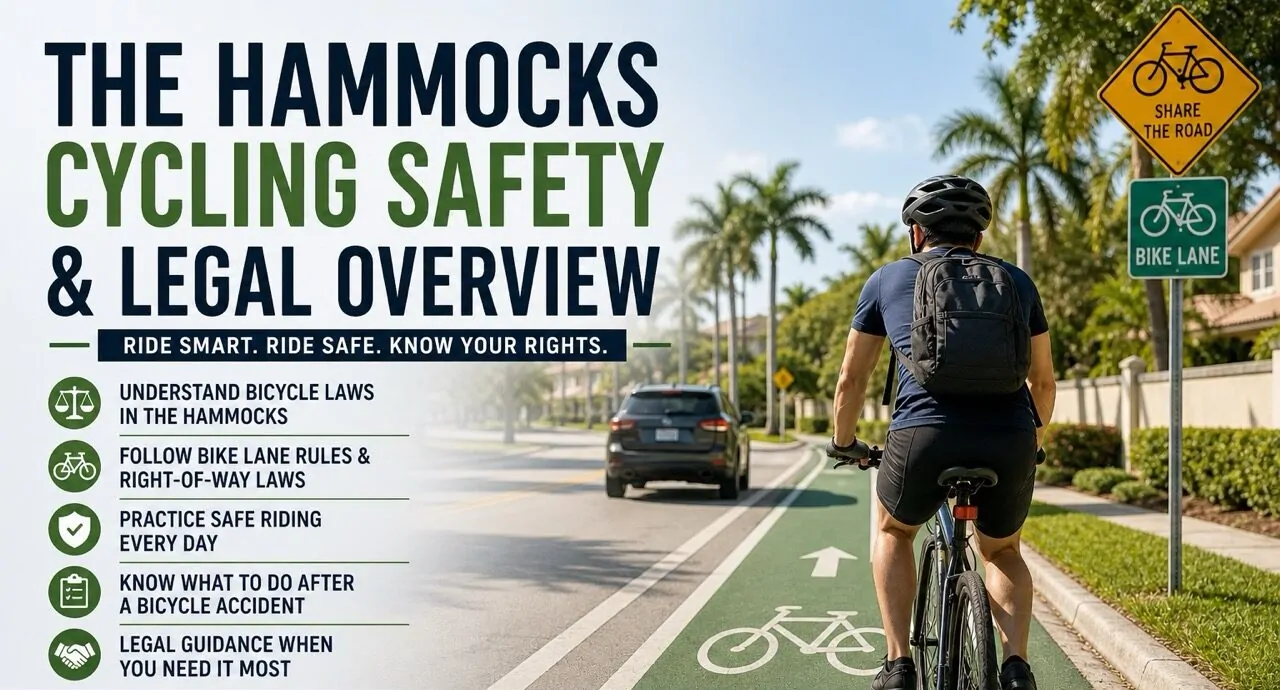
The Hammocks Cycling Safety and Legal Overview
A rider moving through The Hammocks, crossing neighborhood streets, or entering larger roads near Kendall Drive faces a mix of residential traffic and faster-moving vehicles. In these everyday conditions, knowing how to ride safely and legally becomes essential. The Hammocks bicycle safety & legal guide helps cyclists understand how traffic rules, bike lane behavior, and right-of-way laws apply in real situations.
Bello Law P.A. works with cyclists across Miami-Dade to explain how legal rules connect to safety and bicycle accident claims. This guide explains how to follow Bicycle Safety Laws The Hammocks, avoid common mistakes, and understand what steps matter if an accident occurs. By combining legal awareness with practical riding strategies, cyclists can move through local roads with more confidence and clarity.
How Bicycle Laws Apply in The Hammocks
Cyclists in Florida must follow many of the same traffic laws as drivers, including stopping at red lights, yielding when required, signaling turns, and riding predictably. Bicycle Safety & legal guide in The Hammocks explains that bicycles generally function as vehicles under state law, which gives riders both rights and responsibilities on public roads. Understanding the Hammocks Bicycle Traffic Laws also means knowing when to stop, when to yield, how to use bike lanes, and how to position a bicycle safely within traffic.
Florida’s Bike Laws also address nighttime visibility, required lighting, and safe interaction between cyclists and drivers. Riders should use proper lights after dark, avoid unpredictable movements, and communicate turns clearly. Drivers must respect cyclists, maintain safe passing distance, and watch carefully near intersections, driveways, and neighborhood crossings.
According to the Florida Department of Highway Safety and Motor Vehicles, bicycle safety depends on shared responsibility between drivers and cyclists. Bello Law P.A. reviews these rules when evaluating fault in bicycle accident cases.
Bike Lane Rules and Road Positioning
Common Causes of Bicycle Accidents
Many bicycle accidents happen because drivers or cyclists ignore safety rules, traffic signals, or visibility needs. The Hammocks bicycle safety & legal guide shows how these situations can create the extreme risks involved with bicycle accidents, especially near intersections, bike lanes, and busy neighborhood roads.
- Drivers failing to yield at intersections: Drivers may cause serious crashes when they fail to yield to cyclists at stop signs, traffic lights, crosswalks, or neighborhood intersections. These collisions often happen when drivers misjudge speed or overlook riders.
- Vehicles turning across bike lanes: Turning vehicles can create danger when drivers cross bike lanes without checking mirrors, blind spots, or approaching cyclists. This movement can cut off a rider’s path and cause a sudden collision.
- Distracted driving: Drivers using phones, navigation systems, or in-car controls may fail to notice cyclists nearby. Even a brief distraction can prevent a driver from reacting in time at intersections or shared roadway areas.
- Cyclists ignoring signals: Cyclists can increase crash risk when they run red lights, ignore stop signs, or enter intersections without checking traffic. These actions may affect fault under bicycle accident laws, The Hammocks.
- Poor visibility conditions: Low light, rain, dark clothing, blocked sightlines, or lack of bicycle lights can make cyclists harder to see. Poor visibility often increases accident risk during early morning, evening, or bad weather.
Safe Cycling Practices in The Hammocks
Following safe cycling tips The Hammocks can reduce risk and improve awareness on busy neighborhood roads, intersections, and shared traffic areas. Riders who stay alert, maintain a consistent speed, and anticipate driver behavior often have more time to react to sudden changes in traffic.
Practical habits include wearing visible or reflective clothing, using front and rear lights, avoiding distractions such as mobile phones, maintaining full control of the bicycle, and following traffic signals consistently. These steps help cyclists remain predictable to drivers and reduce confusion in high-traffic environments.
The Hammocks bicycle safety & legal guide emphasizes that safety goes beyond basic rules and includes adapting to real-world conditions such as traffic flow, weather, and road design. Bello Law P.A. encourages cyclists to combine awareness with knowledge drawn from bicycle accidents and safety tips from Florida lawyers, which highlight how preparation, visibility, and consistency can help prevent avoidable collisions.
Understanding Right-of-Way for Cyclists
Right-of-way rules play a critical role in preventing bicycle accidents because they define how cyclists and drivers should interact in shared spaces. Under the Hammocks bicycle safety & legal guide, cyclists must yield when required, but they also have clear rights when traveling within their lane or crossing intersections correctly. For example, a cyclist traveling straight through an intersection may have priority over a driver turning across their path.
Drivers entering a roadway from driveways or side streets must yield to cyclists already present. Cyclists must also yield when entering traffic from sidewalks or non-road areas. These rules form the foundation of bike laws The Hammocks and often determine how fault is assigned after a crash.
Bello Law P.A. reviews right-of-way, traffic signals, lane position, and movement patterns to evaluate responsibility. Safety tips from lawyers for commuting by bicycle also reinforce how understanding and following these rules can improve both safety and legal clarity.
What to Do After a Bicycle Accident
Taking the right steps after a crash can protect your health and support a stronger claim. A Tamiami bike accident attorney often emphasizes quick action, clear documentation, and careful communication after a collision. Bello Law P.A. helps riders organize records when they need to work with a North Miami cycling accident lawyer following a bicycle crash.
Seek Medical Attention Immediately
Medical care should come first after a bicycle accident, even if injuries seem minor. Some pain, swelling, dizziness, or soft tissue injuries may appear later. A prompt medical visit creates records that connect the injuries to the crash and supports proper treatment.
Report the Accident to Law Enforcement
A police report can create an official record of the bicycle accident. Officers may document the location, involved parties, traffic conditions, visible injuries, witness details, and possible violations. This report can help support fault analysis under bicycle accident laws The Hammocks.
Document the Scene With Photos
Photos can preserve important details before the scene changes. Riders should capture vehicle positions, bicycle damage, road conditions, traffic signals, skid marks, injuries, and nearby signs. These images can help explain how the crash happened and what factors contributed to it.
Collect Witness Information
Witnesses can provide independent details about the crash. Names, phone numbers, and email addresses may help later if the driver disputes fault. A witness may describe traffic signals, driver behavior, cyclist movement, visibility, or roadway conditions before the impact.
Keep Records of Injuries and Expenses
Accident records can show the full impact of the crash. Keep medical bills, prescriptions, therapy notes, repair estimates, lost wage details, and travel costs for treatment. These records help Bello Law P.A. evaluate damages and organize a clear claim.
How Legal Guidance Helps Cyclists
Cyclists often face challenges after an accident, especially when insurance companies dispute fault, question injuries, or delay the claim process. Bicycle safety & legal guide in the Hammocks explains that legal support can help riders understand their options, protect their rights, and avoid mistakes during communication with insurers.
Bello Law P.A. works with cyclists to review accident details, evaluate liability, organize evidence, and communicate with insurance representatives. This support may include examining police reports, medical records, photos, witness statements, traffic laws, and road conditions. A Bicycle Accident Lawyer can help connect these facts to the claim and explain how responsibility may apply.
Strong legal guidance also helps ensure that the claim reflects medical treatment, lost income, property damage, pain, and long-term effects. This approach aligns with The Hammocks bicycle safety & legal guide principles by focusing on safety, documentation, accountability, and informed decision-making after a bicycle accident.
Long-Term Impact of Bicycle Accidents
Bicycle accidents can create lasting effects that extend far beyond the initial injury. Many riders experience ongoing medical treatment, physical therapy, follow-up care, and limitations that affect daily routines, work responsibilities, and mobility. Some injuries may take months to recover, while others may lead to long-term complications such as chronic pain or reduced physical ability.
The Hammocks bicycle safety & legal guide highlights that these long-term impacts should be considered when evaluating a claim because recovery does not end after the first medical visit. Financial losses may also grow over time, including lost income, reduced earning capacity, and continued treatment costs.
Bello Law P.A. reviews medical records, treatment plans, and work limitations to understand how the accident affected the individual both immediately and over time. Proper documentation helps connect these outcomes to the crash and may influence compensation after a bicycle crash by showing the full extent of the impact.
FAQs about The Hammocks Bicycle Safety & Legal Guide
- Are cyclists required to follow traffic signals?
Yes, cyclists must obey traffic signals, stop signs, lane rules, and roadway markings when riding on public roads. - Can cyclists ride on sidewalks in The Hammocks?
Yes, cyclists may ride on sidewalks, but they must yield to pedestrians and use caution near driveways, crossings, and business entrances. - Do drivers have to yield to cyclists?
Yes, drivers must yield to cyclists when traffic laws give riders the right of way at intersections, crosswalks, turns, or bike lanes. - What is the safest way to ride at night?
Cyclists should use front lights, rear reflectors, bright clothing, and predictable movement to help drivers see them clearly at night. - What causes most bicycle accidents?
Many bicycle accidents involve turning vehicles, failure to yield, distracted driving, poor visibility, unsafe passing, or drivers entering bike lanes. - Can cyclists use bike lanes at all times?
Cyclists can generally use bike lanes, but may leave them to avoid hazards, parked cars, debris, or unsafe road conditions. - What should I do after an accident?
Seek medical care, call police if needed, take photos, collect witness details, preserve records, and avoid making detailed insurance statements. - How is fault determined in bicycle accidents?
Fault depends on traffic laws, right-of-way rules, crash evidence, witness statements, road conditions, and each person’s actions before impact. - Are helmets required in Florida?
Florida requires bicycle helmets for riders under 16, but all cyclists should consider wearing one for added protection. - When should I seek legal help?
Seek legal help soon after an accident so evidence, insurance issues, deadlines, and liability questions can receive proper review.
Take Action to Stay Safe and Protected with Bello Law P.A.
Understanding The Hammocks bicycle safety & legal guide helps cyclists navigate local roads with confidence while protecting their legal rights. From following traffic laws and staying visible to documenting accidents and preserving evidence, each step plays an important role in both safety and recovery. Riders who understand these principles can make better decisions before and after an incident. Bello Law P.A. provides structured guidance to help cyclists evaluate their options, organize their claims, and move forward with clarity after an accident. If you need help reviewing your situation, contact us to discuss your next steps.
Our Location
7340 Southwest 90th Street
Miami, FL 33156
Phone Number
+1 (786) 885-3425
Email Us
Bello@bellolawmiami.com
Taking proactive steps today can help prevent accidents and ensure that your rights remain protected under The Hammocks bicycle safety & legal guide.
