
Slip and Fall Accidents: Private Residence vs Public Property Guide
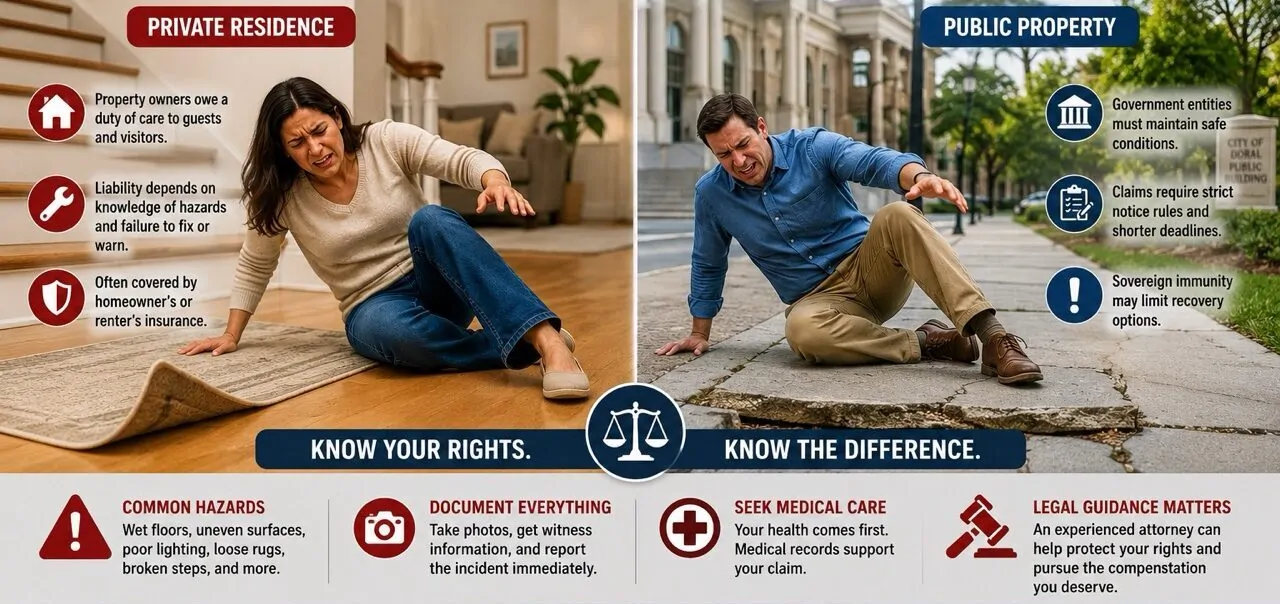
A fall can happen anywhere in Miami-Dade, including a friend’s home in Westchester, a sidewalk near Downtown Doral, or a government building in Coral Gables. The injury may look similar, but the legal path can change based on where the fall occurred. Slip and fall private vs public property cases often involve different liability rules, insurance questions, evidence requirements, and filing procedures.
Bello Law P.A. helps individuals across South Florida understand how these differences may affect their claim. A private residence case may involve a homeowner, landlord, property manager, or homeowner’s insurance carrier. A public property case may involve a city, county, or government agency with stricter notice rules.
A Kendale Lakes slip and fall legal representative can help explain how the location of the fall affects responsibility, documentation, and recovery options. This guide explains the difference in slip and fall liability, how claims work in both settings, and what steps matter after an accident.
Why Location Matters in Slip and Fall Cases
The location of a fall determines which laws apply, who may hold responsibility, and what process the injured person may need to follow. A fall inside a private residence usually focuses on whether the homeowner or property controller knew about a hazard, failed to repair it, or failed to warn visitors.
A fall on public property may involve sidewalks, parks, public buildings, or government-maintained areas, which can require formal claim procedures. In slip and fall private vs public property cases, the type of property owner, the duty owed to the injured person, and the procedures required to file a claim can all shape the legal path.
Understanding these differences helps clarify how private residence vs public property slip and fall claims move forward. Bello Law P.A. reviews the location, hazard, visitor status, evidence, and reporting requirements to determine the appropriate direction. Experienced Slip and Fall Attorneys Serving Doral can help organize these details before deadlines or missing records create problems.
Liability in Private Residence Slip and Fall Cases
Examples include:
- Wet floors in kitchens, bathrooms, pool areas, or entryways can create a fall risk when homeowners do not clean the area quickly or warn visitors before they walk through.
- Broken stairs or loose railings can make normal movement unsafe when guests rely on these structures for balance while entering, leaving, or moving through the residence.
- Poor lighting near doors, steps, hallways, or exterior walkways can prevent visitors from seeing hazards clearly, especially during evening visits or low-visibility conditions.
These situations often fall under premises liability, private residence vs public analysis. Bello Law P.A. reviews whether the homeowner acted reasonably when evaluating slip and fall private vs public property claims.
How Legal Responsibility Changes by Property Type
The duty of care can change depending on whether a fall occurs on private or public property. Private property owners generally must keep reasonably safe conditions for invited guests, tenants, service providers, and others who lawfully enter the property. This may include fixing hazards, giving warnings, checking common areas, and addressing unsafe walkways, stairs, flooring, or lighting.
Public entities also have maintenance duties, but claims against cities, counties, or government agencies may involve special procedures, legal protections, and notice requirements. The difference in slip and fall liability often depends on how the duty applies to the specific property and who controls the hazardous area.
Bello Law P.A. examines ownership, control, maintenance history, warnings, and the location of the fall when reviewing these claims. Understanding the proper process for documenting and reporting a fall at a business in Doral can help clarify how private and public property duties may affect a case under Florida law.
How Fault Is Determined in Each Setting
Fault in a slip and fall case usually depends on the condition that caused the fall, who controlled the property, and whether the injured person acted reasonably. In slip and fall private vs public property cases, important questions include whether a hazard existed, whether the property owner knew or should have known about it, and whether they had enough time to correct it or warn visitors.
Investigators may also review photos, witness statements, incident reports, inspection records, maintenance logs, lighting conditions, footwear, and the injured person’s actions before the fall. Comparative negligence may apply, which means responsibility can be shared between the property owner and the injured person.
Bello Law P.A. evaluates these details carefully when assessing how fault may be divided in a claim. A North Miami Slip and Fall Lawyer can help review whether the evidence supports liability on private property, public property, or another controlled location.
Evidence Required for Private vs Public Claims
Evidence can shape how a claim moves forward because each property type may require different records. Bello Law P.A. reviews the hazard, location, reporting process, and available documentation. An Oakland Park Slip and Fall Lawyer may help evaluate property evidence after a residential or business-related fall.
Evidence for Private Property Claims
Private property claims often depend on proof that shows what caused the fall and whether the property owner acted reasonably. Bello Law P.A. reviews photos, witness details, and maintenance history to understand how the unsafe condition developed and whether the owner had notice of the hazard.
Photos of the Hazard
Clear photos can show the exact unsafe condition that caused the fall, including wet flooring, broken steps, poor lighting, loose rugs, or cluttered walkways inside or around a private residence.
Witness Statements
Witness statements can explain what happened before and after the fall. Guests, neighbors, service providers, or family members may confirm the hazard, warning issues, or unsafe property conditions.
Maintenance Records
Maintenance records can show whether the property owner inspected, repaired, or ignored the hazard. These records may include repair requests, contractor invoices, cleaning notes, or prior complaints.
Evidence for Public Property Claims
Public property claims often involve additional procedures because a city, county, agency, or public authority may control the area. A Slip and Fall Lawyer in Miami Gardens may help review notice rules, agency records, and claim deadlines.
Incident Reports
Incident reports can create an official record of the fall. These reports may include the date, time, location, hazard description, involved parties, and the public department notified.
Government Maintenance Logs
Government maintenance logs can show whether an agency knew about the dangerous condition. These records may include inspection history, sidewalk repairs, lighting complaints, work orders, or prior hazard reports.
Formal Notice Documentation
Formal notice documentation may matter because public claims often require specific procedures. Written notices, agency claim forms, response letters, and filing dates can help show compliance with required steps.
Why Public Property Fall Claims Need Extra Care
Public property slip and fall claims often involve stricter rules than private property cases. An injured person may need to follow specific filing deadlines, notice requirements, and agency procedures before the claim can move forward. Government-related claims may also involve sovereign immunity limitations, which can affect how damages work and what legal steps apply.
These requirements can make the process more difficult, especially when several departments control the area, such as sidewalks, parks, public buildings, or municipal walkways. Bello Law P.A. reviews the fall location, reporting history, responsible agency, and filing timeline when assessing slip and fall private vs public property cases.
A Slip and Fall Lawyer in Kendale Lakes can help explain how these procedural issues may affect a public property claim and what documentation may matter under Florida law.
Hazards That Often Lead to Falls on Different Properties
Common hazards can vary depending on whether the fall happened at a private residence or on public property. Private residence hazards may include wet floors, broken stairs, loose carpets, cluttered walkways, poor lighting, or unsafe entryways. Public property hazards may include uneven sidewalks, potholes, cracked pavement, damaged curbs, poor drainage, or poorly maintained walkways.
These conditions can create serious risks when property owners, agencies, or responsible parties fail to address them within a reasonable time. Bello Law P.A. evaluates these conditions as part of a premises liability private residence vs public analysis.
A Slip and Fall Lawyer in Homestead can review photos, reports, witness statements, and maintenance records to determine how the hazard may affect a slip and fall private vs public property claim.
Compensation Differences Between Private and Public Cases
Compensation can differ based on whether the fall happened on private property or public property. In slip and fall private vs public property cases, private claims often involve a homeowner’s insurance policy, landlord coverage, or another private insurance source. Public property claims may involve a city, county, state agency, or public authority, which can create stricter procedures and possible limits on damages.
The difference in slip and fall liability affects how compensation gets calculated, what evidence matters, and which recovery options may apply. Bello Law P.A. reviews the property type, responsible party, insurance issues, injury severity, and filing requirements before assessing the possible direction of a claim.
A Slip and Fall Attorney in Fort Lauderdale can help explain how these factors may affect a case after a fall at a residence, sidewalk, municipal building, or other location. Each claim depends on the facts, available documentation, and applicable Florida law.
Liability in Public Property Slip and Fall Cases
Public property slip and fall cases can involve sidewalks, parks, government buildings, public walkways, transit areas, and other spaces maintained by local or state authorities. These claims often require a different legal analysis because the responsible party may be a city, county, state agency, or public department rather than a private owner.
In public property slip and fall claims, liability may apply when a government entity failed to maintain safe conditions, ignored a known hazard, or did not repair a dangerous issue within a reasonable time. Bello Law P.A. reviews the location, responsible agency, hazard history, maintenance records, and available reports when evaluating slip and fall private vs public property cases involving public entities.
Legal Requirements for Public Entity Claims
Claims against public entities often involve additional procedures that can make the process more complex than private property claims. An injured person may need to provide formal notice within a specific timeframe, follow government claim procedures, and collect additional documentation before the claim can move forward. Useful evidence may include photos, incident reports, witness statements, maintenance logs, agency complaints, repair records, and written notice documents.
According to the Florida Department of Transportation, maintaining safe public infrastructure plays an important role in reducing accident risks. Bello Law P.A. helps clients understand these procedural requirements and assess how they may affect slip and fall private vs public property claims.
Long-Term Impact of Slip and Fall Injuries
Slip and fall injuries can affect daily life long after the initial accident. Some people need ongoing medical care, physical therapy, mobility support, follow-up appointments, or time away from work.
In slip and fall private vs public property cases, these long-term effects can influence how a claim gets evaluated because the injury may involve more than immediate medical bills. Compensation may account for medical expenses, lost income, reduced earning ability, future care needs, and the broader impact on normal routines.
Bello Law P.A. considers both short-term harm and long-term consequences when reviewing the facts of a fall. A Slip and Fall Attorney in Miami Beach can help evaluate how medical records, work limitations, treatment plans, and daily restrictions may support the claim. Strong documentation helps show how the injury changed the person’s health, work, mobility, and quality of life.
FAQs about Slip and Fall Private vs Public Property
- What is the difference between private and public property in fall cases?
Private property involves homeowners or businesses, while public property involves government entities, which follow different legal rules and procedures for liability and claims. - Can I file a claim for a fall at someone’s home?
Yes. You may file a claim if the homeowner failed to maintain safe conditions or warn you about hazards that caused your injury. - Are public property claims harder to prove?
Yes. Public claims often involve stricter deadlines, additional documentation, and legal protections that make the process more complex than private property cases. - What evidence is needed for a slip and fall claim?
Photos, witness statements, incident reports, and maintenance records help prove the hazard existed and contributed to the fall. - What is premises liability?
Premises liability refers to a property owner’s responsibility to maintain safe conditions and prevent injuries caused by hazards on their property. - Do different rules apply to government properties?
Yes. Government claims require formal notice and must follow specific procedures that differ from private property claims. - Can fault be shared in a slip and fall case?
Yes. Comparative negligence may apply, meaning responsibility can be divided between the injured person and the property owner. - How long do I have to file a claim?
Deadlines vary depending on the type of property, with public claims often requiring shorter notice periods. - What damages can I recover?
Damages may include medical expenses, lost income, and other losses related to the injury. - When should I seek legal help?
You should seek legal guidance as soon as possible to preserve evidence and understand your options.
Take Action After a Slip and Fall with Bello Law P.A.
Understanding slip and fall private vs public property helps individuals navigate the legal differences between these cases. Recognizing how liability, evidence, and procedures vary can make a significant difference in how a claim develops and what options may be available. Each setting involves different responsibilities, documentation requirements, and timelines that can affect the outcome.
Bello Law P.A. provides structured guidance to help individuals evaluate their options and move forward with clarity after a fall. If you need case-specific direction, contact us to discuss your situation and understand the next steps.
Our Location
7340 Southwest 90th Street
Miami, FL 33156
Phone Number
+1 (786) 885-3425
Email Us
Bello@bellolawmiami.com
Taking early action ensures that your claim reflects the full impact of the incident and helps protect your legal rights.
