
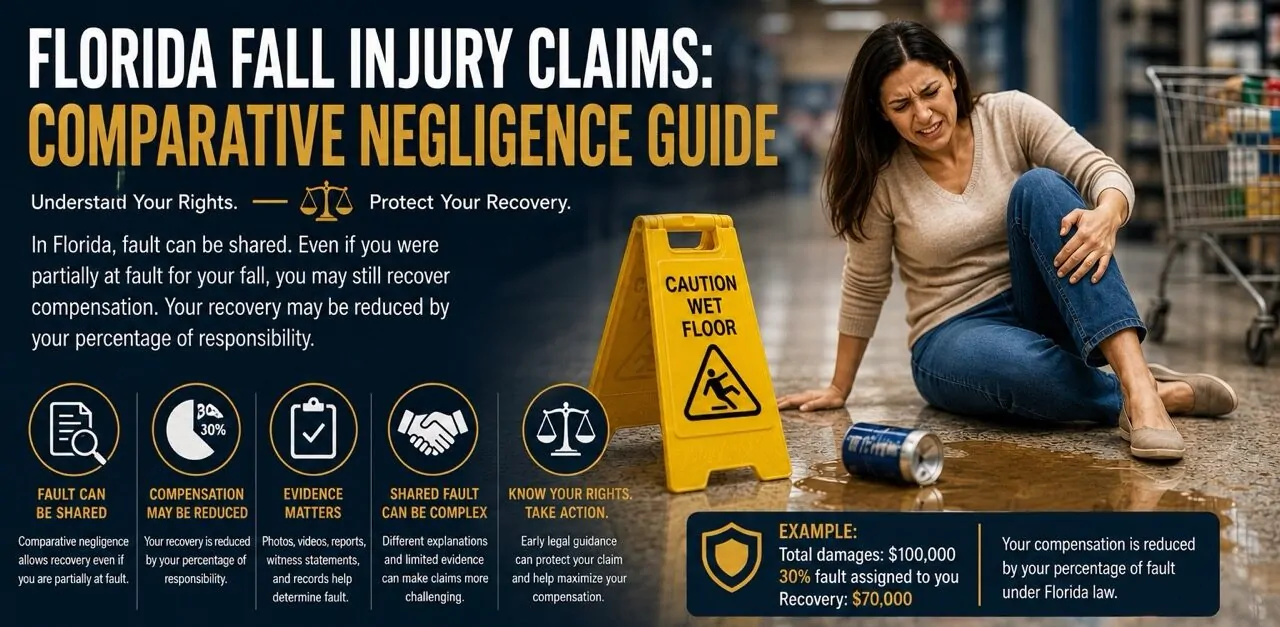
Florida Fall Injury Claims: Comparative Negligence Guide
A fall inside a grocery store aisle in Kendall, a wet lobby near Brickell, or a poorly lit stairwell in an apartment complex can raise a difficult question about responsibility. In many real-world situations, both the property owner and the injured person may play some role in how the accident happened. That is why understanding Florida comparative negligence in fall case situations becomes important when liability is not simple or one-sided.
Small details such as footwear, visibility, warning signs, or the timing of maintenance can influence how fault is assigned. Bello Law P.A. works with individuals across South Florida to review these factors and explain how claims may develop under Florida law.
A slip and fall accident lawyer in Kendale Lakes can help assess how different elements of the incident connect to fault, evidence, and documentation. This guide explains how Florida comparative negligence in fall case principles apply, how responsibility may be divided, and how these decisions may influence compensation in a slip and fall claim.
How Comparative Negligence Works in Florida Fall Cases
Comparative negligence refers to how fault may be shared between the parties involved in an accident rather than assigning full responsibility to one side. In a Florida comparative negligence in a fall case, the injured person may still recover compensation even if they contributed to the incident. However, the amount of compensation may be reduced based on their percentage of fault.
For example, if a person is found 20 percent responsible, their compensation may be reduced by that same percentage. If the level of responsibility reaches a certain threshold, recovery options may become limited under Florida law. This system reflects how actions from both sides are evaluated when determining liability.
Bello Law P.A. reviews factors such as property conditions, warning signs, maintenance history, and the injured person’s actions before the fall. A Doral slip and fall claims attorney can examine how these elements interact to determine how responsibility may be divided and how compensation may be calculated.
How Fault Is Divided in Fall Cases
Determining fault requires a close review of what each party did before the fall occurred. Courts and insurance companies may examine the property condition, maintenance history, warning signs, lighting, witness accounts, and the injured person’s actions. In a Florida comparative negligence in a fall case, Bello Law P.A. reviews these details carefully. A claim involving liability of big-box retailers in grocery store slip and fall cases may also require evaluating how store policies and inspection routines affected safety conditions. In a Florida comparative negligence in a fall case, factors may include:
- Whether the property owner maintained safe conditions
- Whether the injured person ignored visible hazards
- Whether warning signs were present
- Whether reasonable care was exercised
According to the Florida Department of Health, falls remain a leading cause of injury, highlighting the importance of understanding how responsibility is assigned. Bello Law P.A. analyzes these factors carefully to determine how fault applies in a Florida comparative negligence case involving a fall.
Evidence That Affects Fault Determination
Photos of the Hazard
Photos can show the unsafe condition before anyone cleans, repairs, or changes the area. Images may capture wet floors, uneven pavement, poor lighting, missing warning signs, loose mats, or cluttered walkways. Clear photos help explain whether the hazard was visible and whether the property owner had reason to address it.
Surveillance Footage
Surveillance footage can show the moments before, during, and after the fall. Video may reveal how long the hazard existed, whether employees walked past it, whether warning signs appeared, and how the injured person moved through the area. This evidence can strongly affect fault percentages.
Witness Statements
Witness statements can provide independent support for how the fall occurred. A customer, employee, neighbor, or bystander may describe the hazard, lighting, warning signs, or the injured person’s actions. These accounts help clarify disputed facts when both sides present different versions of the incident.
Incident Reports
Incident reports create a written record that connects the fall to the location, time, and reported hazard. These reports may include employee names, injury details, witness information, and the business response. Accurate reports can help support comparative negligence Florida slip and fall evaluations.
Maintenance Records
Maintenance records can show whether the property owner inspected, repaired, or ignored the unsafe condition. Cleaning logs, repair requests, work orders, inspection notes, and prior complaints may reveal whether the owner knew or should have known about the hazard before the fall.
Research from the Centers for Disease Control and Prevention shows that environmental hazards significantly contribute to fall injuries. Bello Law P.A. uses this information to support Florida comparative negligence in fall case evaluations.
How Shared Fault Can Change Compensation
Comparative negligence can directly affect the amount of compensation an injured person may receive after a fall. In a Florida comparative negligence in fall case, the final recovery may decrease based on the injured person’s percentage of fault. For example, if total damages equal $100,000 and the injured person is assigned 30 percent of the fault, the recovery may be reduced to $70,000.
This structure reflects how partial fault slip and fall Florida claims are evaluated under state law. Insurance companies and courts may examine medical records, incident reports, witness statements, and property conditions to determine how responsibility is divided. Bello Law P.A. reviews each factor carefully to help clients understand how compensation may change depending on the facts.
Understanding how fault is shared between private residence and public property fall cases can also help explain how these calculations apply in real situations, including how documentation and location influence the percentage assigned to each party involved in the incident.
Why Shared Fault Claims Can Become Complicated
Comparative negligence cases can become more complex when both sides present different explanations of how the fall occurred. In a Florida comparative negligence in a fall case, insurance companies may argue that the injured person acted carelessly, ignored a visible hazard, or failed to use reasonable caution. Disputes may also arise over whether warning signs were present, whether lighting conditions affected visibility, or whether the hazard existed long enough for the property owner to address it.
A lack of clear evidence can make these arguments harder to resolve. Bello Law P.A. reviews photos, incident reports, witness statements, maintenance records, and medical documentation to understand how each factor may affect fault allocation.
A Slip and Fall Lawyer in Dania Beach can help evaluate these issues and explain how shared fault slip and fall Florida claims may develop when responsibility is not clearly defined.
Examples of Shared Fault in Slip and Fall Cases
Shared fault can happen when both the property owner’s unsafe condition and the injured person’s actions contribute to the fall. Bello Law P.A. reviews these details carefully in each Florida comparative negligence case involving a fall. A Slip and Fall Lawyer in Homestead can help explain how these scenarios may affect fault percentages.
Wet Floor Without Warning Signs and Distraction
A business may create liability when a wet floor has no warning signs, especially if employees knew about the spill or should have noticed it during routine inspections. However, the injured person’s conduct may also matter. If the person looked at a phone, rushed through the aisle, or ignored their surroundings, the court may assign fault to both sides under comparative negligence rules.
Broken Walkway and Running
A broken walkway may show poor property maintenance when cracks, uneven pavement, or damaged surfaces remain unrepaired. The property owner may face responsibility if the condition existed long enough to address. However, if the injured person was running, jumping, or moving carelessly through the area, that behavior may reduce compensation because the court may find that both parties contributed to the fall.
Poor Lighting and Visible Obstacles
Poor lighting can make stairs, hallways, parking lots, or walkways unsafe because visitors may struggle to see changes in surface level or objects in their path. Still, if an obstacle remained visible and the injured person ignored it, comparative negligence may apply. The court may review lighting, visibility, warning signs, and personal caution before assigning fault percentages.
Why Fault Percentages Matter Beyond the First Claim
The percentage of fault assigned in a fall case can influence more than the initial compensation amount. In a Florida comparative negligence in a fall case, fault allocation may affect settlement discussions, insurance negotiations, and how damages are evaluated over time. A higher percentage of fault assigned to the injured person may reduce recovery and impact future claim decisions.
This can become especially important when injuries require ongoing medical care, rehabilitation, or long-term support. Bello Law P.A. evaluates both immediate and future consequences when reviewing how fault applies in a case.
Medical records, treatment plans, and work limitations may all influence how damages are calculated. A Slip and Fall Attorney in Miami Beach can help assess how evidence supports a fair distribution of responsibility and how that percentage may shape the outcome of the claim.
FAQs about Florida Comparative Negligence in Fall Case
- What is comparative negligence?
Comparative negligence means fault is shared between parties, and compensation is reduced based on each person’s percentage of responsibility. - Can I still recover compensation if I was partially at fault?
Yes. Florida law allows recovery even if you share fault, but your compensation may be reduced. - How is fault determined in a fall case?
Fault is based on evidence such as photos, witness statements, and maintenance records. - What is a shared fault?
Shared fault occurs when both parties contribute to the accident. - Does comparative negligence apply to all fall cases?
Yes, it applies to most slip and fall claims in Florida. - What evidence is needed to prove fault?
Photos, reports, and witness statements are key evidence. - Can insurance companies dispute fault?
Yes, insurers often challenge fault to reduce payouts. - What is constructive notice?
It means a hazard existed long enough that the owner should have known. - How does fault affect compensation?
Compensation is reduced by the percentage of fault assigned. - When should I seek legal help?
Early legal guidance helps protect your claim and evidence.
Take Action to Protect Your Rights with Bello Law P.A.
Understanding Florida comparative negligence in fall case principles helps individuals navigate complex slip and fall claims. Recognizing how fault may be shared and how it can affect compensation can make a meaningful difference in how a claim develops and what options may be available. Careful evaluation of evidence, actions, and property conditions often plays a key role in this process. Bello Law P.A. provides structured legal guidance to help individuals evaluate their options and move forward with clarity. Contact us today to discuss your situation and next steps.
Our Location
7340 Southwest 90th Street
Miami, FL 33156
Phone Number
+1 (786) 885-3425
Email Us
Bello@bellolawmiami.com
Taking early action helps protect your legal rights and preserves important evidence after a fall. Timely reporting, medical care, photos, witness details, and written records can support a clearer claim. Bello Law P.A. helps individuals understand how each step may affect liability, compensation, and the full impact of the incident.
